Your Trusted Ottawa Mortgage Broker
Personalized mortgage solutions for homebuyers, homeowners, and real estate investors across Ottawa.

Mortgage Pre-Approval
Know your budget and shop for your new home with confidence

Mortgage Renewals
Compare your options before accepting your lender’s renewal offer

Mortgage Refinance
Access your home equity, consolidate debt, or improve your cash flow

Financing Solutions
Explore mortgage options tailored to your income and financial goals

Ready to Apply?
Complete my secure online application, and I’ll personally follow up with the next steps
MEET VANESSA WILSON
Mortgage advice built around your goals
Clear advice. Better options. Confident decisions.
Finding the right mortgage is about more than securing a competitive rate—it’s about choosing a strategy that supports your goals.
I’m Vanessa Wilson, an Ottawa Mortgage Agent Level 2. I help homebuyers and homeowners understand their options, compare lenders and move confidently through buying, renewing, refinancing or more complex financing.
✓ Access to banks, credit unions, monoline and alternative lenders
✓ Personalized solutions for straightforward and complex needs
✓ Hands-on support from application through closing

PERSONAL MORTGAGE GUIDANCE
Prefer to speak with me directly?

FREE CANADIAN MORTGAGE APP
See how much home you may be able to afford
Download my free Canadian Mortgage App, select 'Pre-Qualification' and tap 'Start New' to receive a quick estimate without affecting your credit score.
Pre-qualification provides an estimate only and is not a mortgage approval.
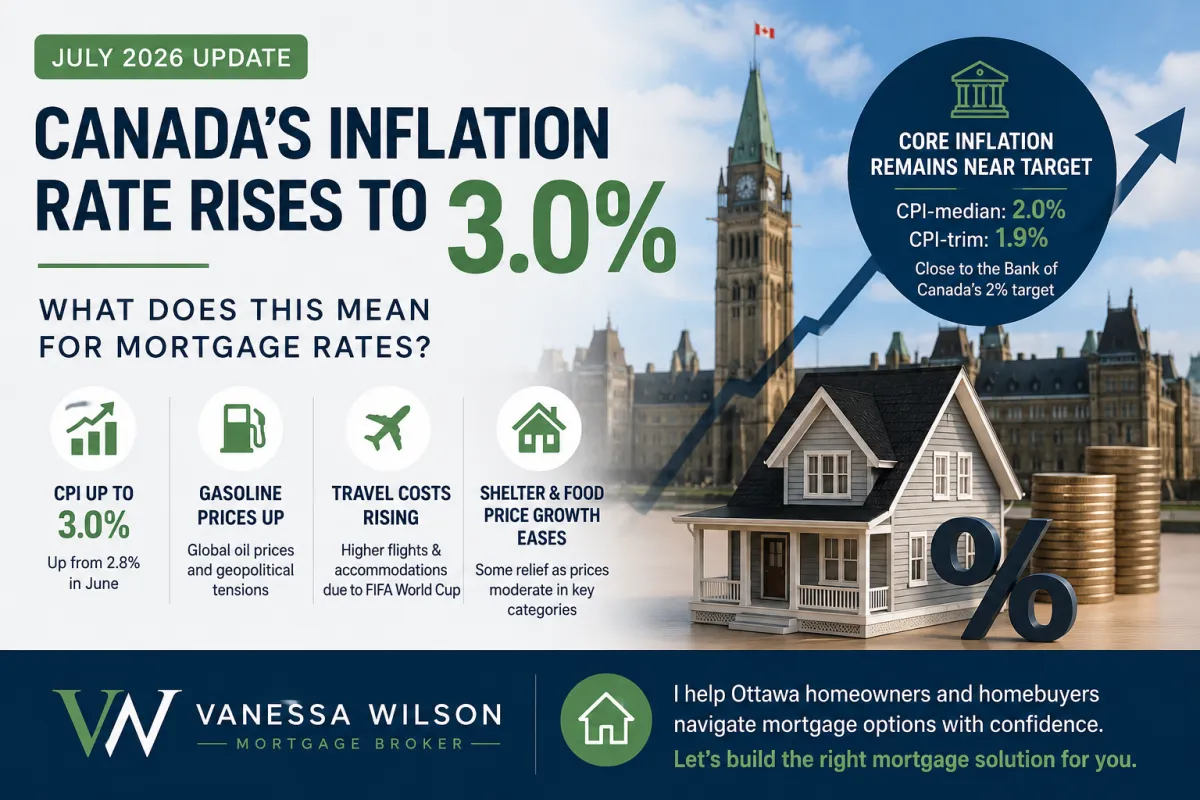
Canada’s Inflation Rate Rises to 3.0% — What Does This Mean for Mortgage Rates?
Canada’s latest inflation numbers are in, and inflation moved higher again in July.
The Consumer Price Index (CPI) increased 3.0% year-over-year in July 2026, up from 2.8% in June. While the increase may catch the attention of homeowners and homebuyers watching interest rates, the details behind the headline number are important.
What Is Driving Inflation Higher?
A significant contributor continues to be higher energy costs. Gasoline prices have risen sharply compared with last year, reflecting higher global oil prices and continued geopolitical uncertainty.
Travel-related costs have also been putting upward pressure on inflation. With the FIFA World Cup taking place across North America this summer, increased demand for flights, accommodations and travel has contributed to higher prices in these categories.
There was some better news elsewhere. Price growth for food and shelter moderated, which suggests inflationary pressure is not increasing evenly throughout the economy.
Core Inflation Remains Close to the Bank of Canada’s Target
The Bank of Canada pays close attention to measures of core inflation because they can provide a clearer picture of underlying price pressures.
In July:
CPI-median was 2.0%
CPI-trim was 1.9%
These measures remain close to the Bank of Canada’s 2% inflation target, despite the higher headline CPI number.
That distinction is important when thinking about where interest rates could go next.
What Does This Mean for the Bank of Canada?
The Bank of Canada will likely continue to watch whether the recent increase in headline inflation is temporary or whether price pressures begin spreading more broadly through the economy.
Higher gasoline and travel costs can push the headline inflation number higher without necessarily indicating that underlying inflation is becoming significantly stronger.
For mortgage borrowers, this means one inflation report shouldn't be viewed in isolation. The Bank will also be considering employment, economic growth, consumer spending, core inflation and other economic data when making its next interest-rate decision.
What Does This Mean for Mortgage Rates?
This is where things get particularly important for homeowners and homebuyers.
Variable mortgage rates are closely connected to the Bank of Canada’s overnight rate. If underlying inflation remains contained, it may give the Bank more flexibility with monetary policy. If inflation begins moving persistently higher, however, the Bank may need to remain more cautious.
Fixed mortgage rates work differently. They are influenced more heavily by Government of Canada bond yields and financial-market expectations about future inflation and interest rates. This means fixed mortgage rates can move even when the Bank of Canada does not change its overnight rate.
That's why I don't recommend making a mortgage decision based solely on predictions about whether rates will rise or fall.
Fixed or Variable: Which Strategy Makes Sense Right Now?
There isn't one mortgage rate or term that's right for everyone.
A borrower purchasing a home today may have very different priorities from someone renewing a mortgage, refinancing debt or expecting to sell their property within a few years.
When I review mortgage options with clients, I look beyond the advertised rate and consider factors such as:
Fixed versus variable rate
Length of the mortgage term
Prepayment privileges
Potential penalties
Flexibility to refinance or sell
Overall cost of borrowing
Your future financial and housing plans
The lowest mortgage rate today isn't always the lowest-cost mortgage over the life of your financing.
Have a Mortgage Renewal Coming Up?
If your mortgage is renewing within the next several months, you don't necessarily need to wait for your lender's renewal letter.
Starting early gives us time to review your current mortgage, compare available options and develop a strategy based on where rates and your personal circumstances are today.
Once we've identified an appropriate option, I can also continue monitoring available rates and look for opportunities to improve your mortgage before closing, where lender policies and timing permit.
Buying a Home in Ottawa?
If you're planning to purchase a home in Ottawa or the surrounding area, understanding how changing interest rates affect your purchasing power and mortgage payment is an important part of the process.
A mortgage pre-approval isn't just about determining the maximum amount you can borrow. It's also an opportunity to discuss down payment, monthly payments, closing costs, fixed versus variable rates and how different mortgage strategies could affect your finances over the next several years.
Let’s Review Your Mortgage Strategy
Inflation and interest rates will continue to change. Your mortgage strategy should be based on more than trying to predict the next Bank of Canada announcement.
Whether you're buying a home, renewing your mortgage or considering a refinance, I can review your situation, explain the available options and help you choose a mortgage strategy that makes sense for both today and the future.
Vanessa Wilson
Ottawa Mortgage Broker
Mortgage rates, qualification requirements and lender policies are subject to change. The information above is general in nature and should not be considered financial advice specific to your individual circumstances.

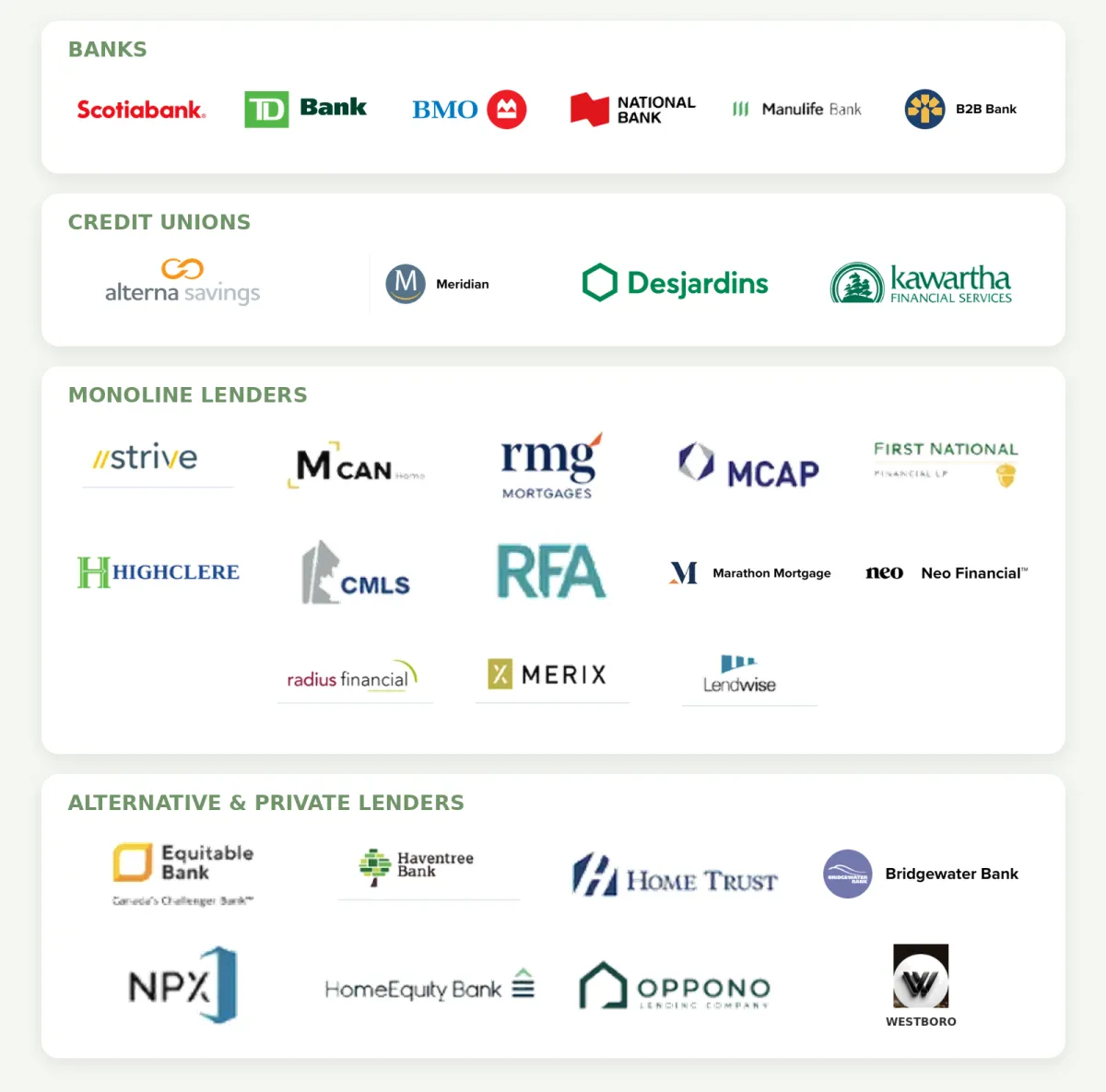
MY LENDER NETWORK
More lenders. More options.
I compare solutions from banks, credit unions, monoline lenders and alternative lenders to find the right fit for you.
ABOUT VANESSA
Vanessa Wilson
Mortgage Agent Level 2
Licence #M21002877
Clear advice. Personalized mortgage strategies. Support you can count on.